Choosing the best material for outdoor signs is not simply a matter of selecting the strongest panel available. The right choice depends on where the sign will be installed, how long it needs to last, how much exposure it will receive, the visual impression your business wants to create, and the budget available for fabrication and installation.
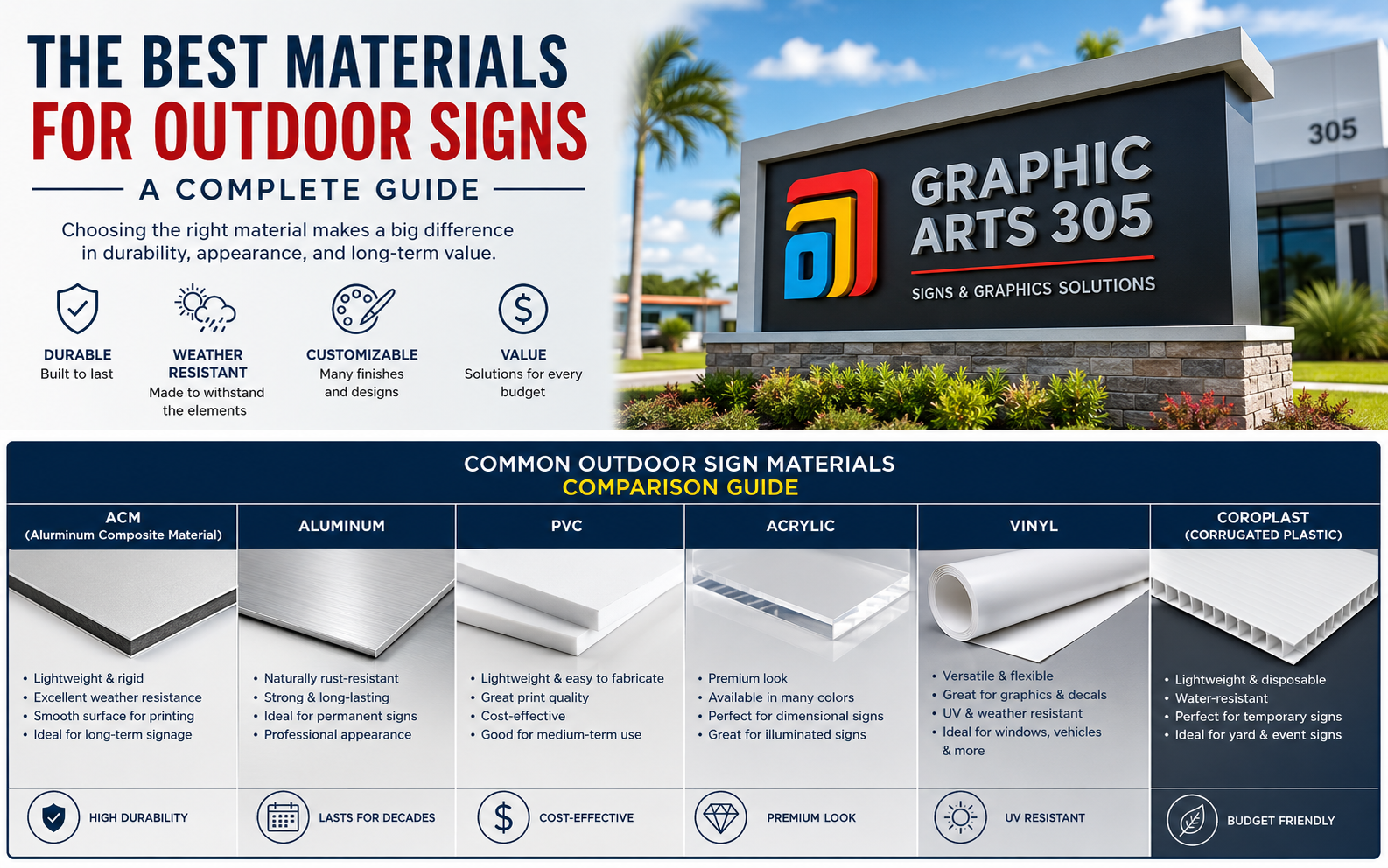
This complete guide to outdoor signage compares the most widely used materials for outdoor signs, including ACM, aluminum, PVC, acrylic, vinyl, Coroplast, dimensional materials, and backlit solutions. It also explains the differences in durability, weather resistance, appearance, maintenance, and cost so you can choose the right outdoor sign material for a storefront, commercial property, construction project, event, or other application.
For businesses in Miami and South Florida, material selection deserves additional attention. Heat, humidity, rain, intense UV rays, coastal air, and strong wind can expose weaknesses quickly. The best outdoor sign is therefore not necessarily the most expensive one. It is the sign designed around its actual environment.
1. What Should You Look for When Choosing a Sign Material for Outdoor Signs?
The first step in choosing the best material is defining what the sign needs to accomplish. A permanent storefront identification sign has completely different requirements from temporary yard signs, promotional banners, or real estate signage.
A good sign material for exterior use should be evaluated according to several factors to consider: expected lifespan, exposure to weather, structural strength, weight, printing quality, installation method, maintenance requirements, and visual appearance. A material with excellent durability may still be the wrong choice if it is unnecessarily heavy, expensive, or difficult to install for the intended application.
The location matters just as much as the substrate. Signs installed under an awning experience different outdoor conditions from signs mounted directly on a building facade. Likewise, freestanding panel signs need to handle wind differently from a panel fixed flat against a wall. Understanding these variables before production makes choosing the right material much easier.
2. Is ACM the Best Material for Outdoor Signs?
For many commercial projects, ACM is one of the most balanced durable materials available for exterior signage.
ACM stands for aluminum composite material. It is typically constructed from two thin aluminum sheets bonded to a central core. Depending on the product, that internal structure may use a polyethylene core, solid polyethylene core, or another plastic core. This construction produces a rigid panel that remains relatively lightweight.
Products such as Dibond are well-known examples of aluminum composite panels used in the sign industry. The combination of aluminum sheets and a stable core gives the material good dimensional stability while creating a smooth surface for printed graphic applications.
For many permanent and semi-permanent outdoor signs, ACM offers a strong balance between weight, appearance, weather resistance, and cost. It is particularly useful for storefront signs, commercial property signage, real estate panels, construction signage, parking information, and directional signs.
Another advantage is customization. ACM can be cut into different sizes and shapes and printed directly using UV-cured inks. For an outdoor business sign that needs professional presentation without the weight of a thick solid aluminum sheet, ACM is often an excellent solution.
3. When Are Aluminum Signs the Better Choice?
Aluminum signs remain one of the most established solutions for long-term exterior use. Aluminum is naturally resistant to corrosion, making it especially suitable for locations exposed to moisture, rainfall, and humid climates.
Compared with steel, aluminum is relatively lightweight while still providing structural strength. It can be painted, coated, printed, routed, or combined with vinyl graphics. These characteristics make solid aluminum suitable for parking signs, traffic-style signs, property identification, commercial building signs, and other projects where permanence is important.
A solid aluminum sheet can provide greater structural integrity than lightweight plastics, although thickness and mounting requirements must still be determined according to sign size and location.
One of the biggest advantages of aluminum is longevity. Properly fabricated aluminum signage can remain functional for many years, and certain architectural metal applications may last for decades when adequately maintained.
Metal finishes may also evolve visually over time. Certain metals intentionally develop a patina, although aluminum itself is generally selected more for its clean finish and resistance to rust than for decorative aging.
For projects where long-term durability, stability, and low maintenance matter more than achieving the lowest initial cost, aluminum can be one of the strongest materials available.
4. Is PVC a Good Outdoor Sign Material?
Rigid PVC is another common option for commercial signage. It provides a smooth printing surface, relatively low weight, and substantial flexibility in fabrication.
A PVC sign can be printed directly with UV inks, cut into custom shapes, and produced in multiple thicknesses. These characteristics make PVC especially useful for retail displays, menus, promotional graphics, informational signs, short- and medium-term exterior projects, and certain indoor and outdoor applications.
PVC can be more substantial than lightweight corrugated plastic while remaining easier to handle than many metal panels. It is also often cost-effective for projects where the visual quality of the printed graphic matters but the project does not require heavy-duty metal construction.
However, PVC should not automatically be considered the best material for every exterior application. Large unsupported sheets may react differently to heat or structural stress depending on thickness and installation method.
For a large sign exposed to full Florida sun and wind, an installer might prefer aluminum or PVC only after evaluating size, mounting, and expected service life. For protected applications or properly supported panels, PVC can perform very well.
5. Are Acrylic Signs Suitable for Outdoor Signage?
Acrylic is often selected when appearance is as important as structural performance.
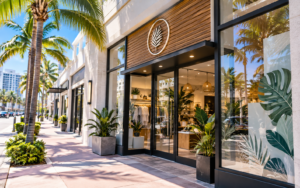
Its polished surface produces a contemporary, premium look similar to glass while remaining lighter and more resistant to breakage. For this reason, acrylic signs are popular for corporate logos, lobby signage, architectural signs, storefront lettering, light boxes, and dimensional branding.
The material can be transparent, translucent, frosted, colored, or opaque. It can also be laser cut or fabricated into individual letter shapes, logos, and decorative panels.
For exterior use, however, acrylic specifications must match the installation. Not every acrylic application is intended for full exposure to severe outdoor environments. Thickness, mounting system, UV stability, impact exposure, and structural support must all be considered.
Acrylic works particularly well in signage systems that combine multiple materials. For example, acrylic letter elements can be installed over an ACM background, translucent acrylic can form the face of illuminated signage, or cut acrylic can be combined with metal components for a more architectural appearance.
When properly specified, acrylic offers a strong combination of visual sophistication and functional performance.
6. When Should You Choose Coroplast or Corrugated Plastic?
Not every exterior sign is intended to be permanent.
Coroplast, a widely used type of corrugated plastic, is particularly effective for temporary signage because it is lightweight, inexpensive, easy to transport, and simple to install. Its internal corrugated plastic core gives the board enough rigidity for many short-term applications without adding excessive weight.
Typical uses include yard signs, political signs, event signage, temporary directions, real estate signs, short-term promotions, and some a-frame signs.
Coroplast is also water resistant, which makes it more suitable for temporary exterior use than paper-based materials. Wire stakes and lightweight frames can make installation quick and inexpensive.
Its limitations are equally important.
Coroplast is not intended to replace aluminum or ACM for permanent business identification. Prolonged sun exposure, wind, physical stress, and temperature changes can eventually affect its appearance and flatness.
If the campaign will last a few weeks or months, Coroplast may be the best material from a financial perspective. Paying for an architectural-grade panel would add cost without creating meaningful additional value.
For long-term commercial exterior signs, however, a more rigid and durable substrate is usually the better investment.
7. How Does Vinyl Work for Outdoor Signs and Exterior Graphics?
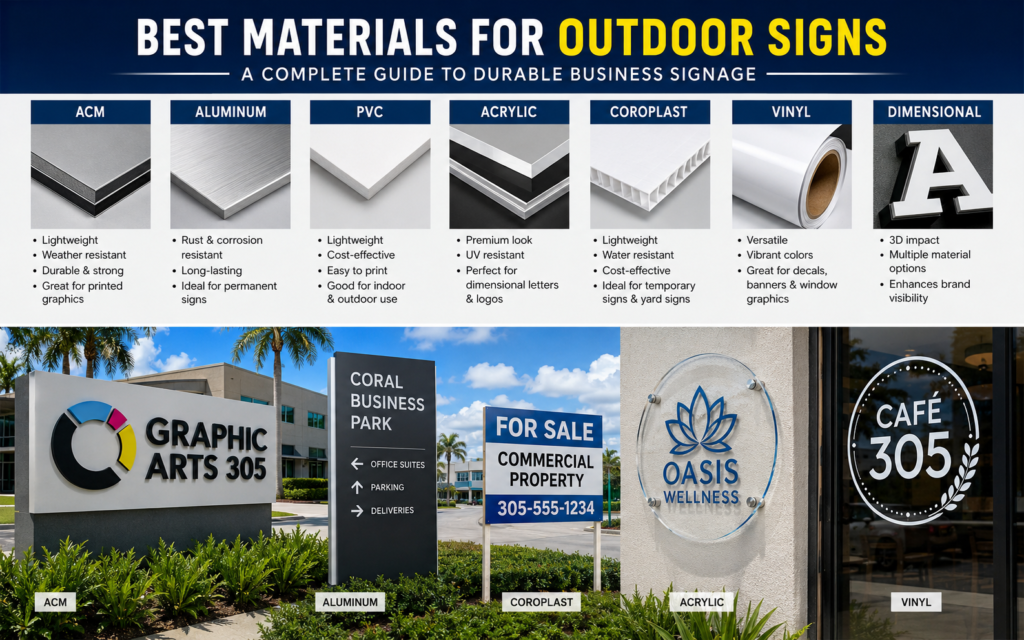
Vinyl is one of the most versatile materials used in the sign industry, although it works differently from rigid substrates such as ACM, aluminum, or PVC.
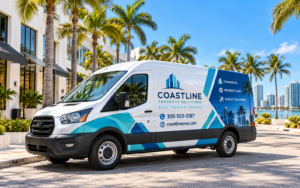
Adhesive vinyl can be applied to glass, vehicles, metal panels, acrylic, storefront windows, walls, and many other prepared surfaces. This makes it ideal for branding, decals, graphic elements, window lettering, promotional messages, vehicle graphics, and overlays applied to existing signs.
Outdoor-grade vinyl products are engineered to withstand sunlight and changing environmental conditions for different periods depending on the film selected. Premium exterior films generally offer better UV stability, adhesion, conformability, and longevity than short-term promotional films.
Vinyl is also commonly used in banners. A vinyl banner can create large-scale visibility without requiring a rigid structure, making it useful for events, grand openings, temporary sales, festivals, and construction projects.
However, the phrase “vinyl sign” can refer to very different products. Film grade, adhesive type, ink technology, laminate, surface preparation, and installation technique all influence performance.
For permanent professional signage, vinyl is frequently paired with a rigid substrate rather than used as the structural material itself.
8. Which Materials Work Best for Dimensional Letters and 3D Outdoor Signage?
Flat panels are only one type of exterior signage. Many businesses achieve stronger visual impact by using dimensional logos, individual letters, fabricated cabinets, or architectural elements.
Dimensional letter signage can be produced from acrylic, aluminum, PVC, foam products, composite structures, or combinations of multiple materials. Depending on the design, some projects may even use 3D plastic letters.
Individual letters add depth and create natural shadows that help the sign interact with the building facade. Metal or acrylic lettering can also be combined with internal or external lighting.
The correct material depends on size, mounting surface, wind exposure, depth, finish, illumination, and the desired visual impression. Exterior dimensional signs need more than a visually attractive face; the attachment system must also be engineered appropriately.
A premium storefront might combine painted metal letters with acrylic faces. Another design might use acrylic letters mounted onto an ACM panel. The variety of materials available makes dimensional signage one of the most flexible categories in commercial branding.
This approach is particularly useful when the goal is to make the signage feel integrated into the architecture rather than simply attached to it.
9. What Is the Best Outdoor Signage Material for Miami Weather?
Miami adds another layer of complexity to material selection.
High humidity, intense heat, frequent rainfall, strong sunlight, coastal air, and periods of severe wind mean exterior signs need to tolerate demanding weather conditions. A material that performs adequately in a mild climate may require different specifications in South Florida.
For many Miami projects, ACM and aluminum signs are strong candidates because they provide rigidity and good resistance to environmental exposure. Exterior-grade vinyl also works well for windows, vehicles, panels, and promotional graphics when the correct film is used.
PVC can be appropriate for specific applications, particularly when properly supported and protected from extreme structural stress. Acrylic can also perform well when its thickness, fabrication, and mounting conditions are suitable for the installation.
The printing process matters too. UV printing can create vibrant graphics while improving resistance to fading compared with inks not intended for exterior use. Protective laminates may add additional UV and abrasion resistance when required.
No substrate is entirely weatherproof in every situation. The entire sign system—including panel, ink, laminate, hardware, structure, and installation—must be designed around the actual site.
This is particularly important in South Florida, where the ability of a sign to handle weather and wind often matters as much as the printed image itself.
10. How Do You Choose the Best Material for Your Outdoor Sign?
Choosing the best substrate becomes much easier when the decision starts with the intended application rather than the product catalog.
Begin with the expected lifespan. If the sign will remain outside for five years, temporary plastic panels will probably create unnecessary replacement costs. If the message will disappear after one weekend, using premium metal may be wasteful.
Next, evaluate exposure. Is the sign in direct sun? Is it under cover? Is it mounted near the coast? Will it be exposed to significant rain or wind? These questions influence the required level of durability and weather resistance.
Size also matters. As signs become larger, panel rigidity and installation methods become increasingly important. A substrate that works perfectly for a small parking sign may not be suitable for a large unsupported facade panel.
Brand presentation is another factor. A temporary Coroplast panel communicates differently from brushed metal letters, premium acrylic, or a custom illuminated cabinet.
Finally, compare total ownership cost rather than initial production price. Installation, replacement frequency, cleaning, refinishing, and general upkeep all affect long-term value.
The correct material for your outdoor project is therefore the one that balances performance, appearance, lifespan, location, and budget.
Frequently Asked Questions About Materials for Outdoor Signs
What is the most durable material for outdoor signs?
For many commercial applications, aluminum and ACM are among the most durable choices. Both provide strong structural performance and good weather resistance, although exact lifespan depends on thickness, coating, installation, print method, and environmental exposure.
Is ACM better than aluminum?
Neither material is universally better.
ACM is lighter because it combines thin aluminum skins with a central core, while solid aluminum provides a consistent metal structure throughout the sheet. ACM often works extremely well for printed outdoor signage, while solid aluminum can be preferred for applications requiring greater metal thickness or long-term structural performance.
Is PVC suitable for exterior signage?
Yes, a properly specified PVC sign can work in many outdoor applications. However, panel size, thickness, heat exposure, support, and installation should be considered. PVC is particularly useful where lightweight fabrication and high-quality printed graphics are priorities.
Can acrylic be used for indoor or outdoor signs?
Yes. Acrylic can be used for both indoor or outdoor signage, but exterior installations require the correct thickness, grade, fabrication, and mounting method. It is especially useful for premium logos, backlit signs, dimensional lettering, and architectural signage.
What material works best for temporary outdoor signs?
Corrugated plastic and vinyl banners are among the most practical options for temporary projects. They are lightweight, economical, and easy to replace.
What is the best outdoor sign board material?
For permanent printed commercial applications, ACM is often one of the strongest all-around choices because it combines rigid construction, low weight, professional appearance, and good resistance to exterior conditions.
Are outdoor sign materials recyclable?
Some sign substrates can be recyclable, particularly metals such as aluminum. Recycling options for plastics and composite materials vary by local facility and material composition, so businesses should verify local recycling capabilities before disposal.
Choosing the Right Outdoor Signs for Your Business
There is no universal best material for outdoor signs because different businesses have different signage needs.
For long-term printed exterior panels, ACM provides one of the best combinations of rigidity, appearance, manageable weight, and durability. Traditional aluminum offers excellent long-term performance and resistance to corrosion. PVC provides flexible fabrication and strong print quality for many commercial applications, while acrylic creates a more refined architectural appearance.
For temporary campaigns, Coroplast and vinyl banners usually make more sense. For premium storefront branding, dimensional letters, acrylic components, metal fabrication, or illuminated signage can produce a more sophisticated result.
Even a wooden sign can be appropriate in specific decorative environments, but natural materials generally require more maintenance and protection from outdoor exposure than aluminum-based substrates.
The most important principle is simple: do not select a material because it is familiar or inexpensive. Select it because it matches the environment, lifespan, branding goals, and installation conditions of the project.
At Graphic Arts 305, businesses can create custom signage using ACM, PVC, acrylic, vinyl, dimensional materials, illuminated solutions, and other substrates selected around the specific application.
Whether you need a storefront sign, directional signage, property identification, promotional graphics, building signage, or another custom project, the right material can improve both the appearance and the useful life of the finished sign.
Key Things to Remember
- ACM is one of the strongest all-around materials for permanent printed exterior signage.
- Aluminum offers excellent durability, corrosion resistance, and long-term performance.
- PVC combines lightweight construction with strong print quality and flexible fabrication.
- Acrylic is particularly effective for premium, dimensional, and illuminated signage.
- Vinyl works well for windows, vehicles, banners, decals, and graphics applied to rigid surfaces.
- Coroplast is best suited to temporary campaigns, events, real estate signage, and yard signs.
- Miami’s heat, humidity, rainfall, coastal air, and UV exposure should influence material selection.
- Printing technology, mounting hardware, structural support, and installation are just as important as the substrate.
- Temporary signs do not require permanent-grade materials, while permanent business signs should not rely on short-term substrates.
- The best material for outdoor signs is the one designed for the sign’s real location, expected lifespan, branding requirements, and budget.