A professionally installed car wrap can transform the appearance of your vehicle and turn it into a powerful advertising asset. But installation is only the beginning. Learning how to care for your vehicle wrap correctly is essential if you want to preserve its color, finish, adhesion, and professional appearance.
Regular cleaning, protection from contaminants, careful washing, and smart parking habits can all help your vinyl wrap perform better over time. This is particularly important in Miami and South Florida, where strong UV exposure, heat, humidity, rain, road grime, and coastal conditions can put additional stress on exterior graphics.
This guide explains the best care of your car wrap, including how to wash it safely, whether you can use an automatic car wash, how to remove bird droppings and tree sap, whether wax or a ceramic coat can help, and what mistakes can damage the vinyl.
Article Outline
- Why is car wrap maintenance important?
- What is the safest way to wash a vinyl wrap?
- Can you use an automatic car wash on a wrapped vehicle?
- How should you spot clean bird droppings, sap, and contaminants?
- Can you pressure wash a vehicle wrap?
- Should you use wax on car wrap vinyl?
- Is a ceramic coat useful for a wrapped car?
- How can you protect your car wrap from the Miami sun?
- What wrap maintenance mistakes should you avoid?
- How should businesses maintain commercial and fleet vehicle wraps?
- When should a vehicle wrap be repaired or replaced?
Why Is Car Wrap Maintenance So Important?
Good car wrap maintenance is about more than keeping a vehicle clean. Vinyl is an exterior film that remains exposed to sunlight, moisture, road contaminants, temperature changes, insects, dirt, and frequent washing. Without proper care, these factors can gradually affect the appearance and performance of the material.
A high-quality vehicle wrap can provide years of visual impact, but environmental exposure and poor cleaning habits can cause premature fading, staining, lifting, cracking, or deterioration. Neglecting your wrap can also allow dirt and harmful substances to remain on the surface long enough to degrade the vinyl.
For businesses, the consequences go beyond material wear. A commercial vehicle with peeling graphics, faded colors, or dirty branding can negatively affect how customers perceive the company. Keeping your car wrap looking clean and professional is therefore part of maintaining your brand image.
Knowing the right way to maintain your wrap helps protect your investment while preserving the impact of your graphics.
What Is the Safest Way to Wash a Vinyl Wrap?
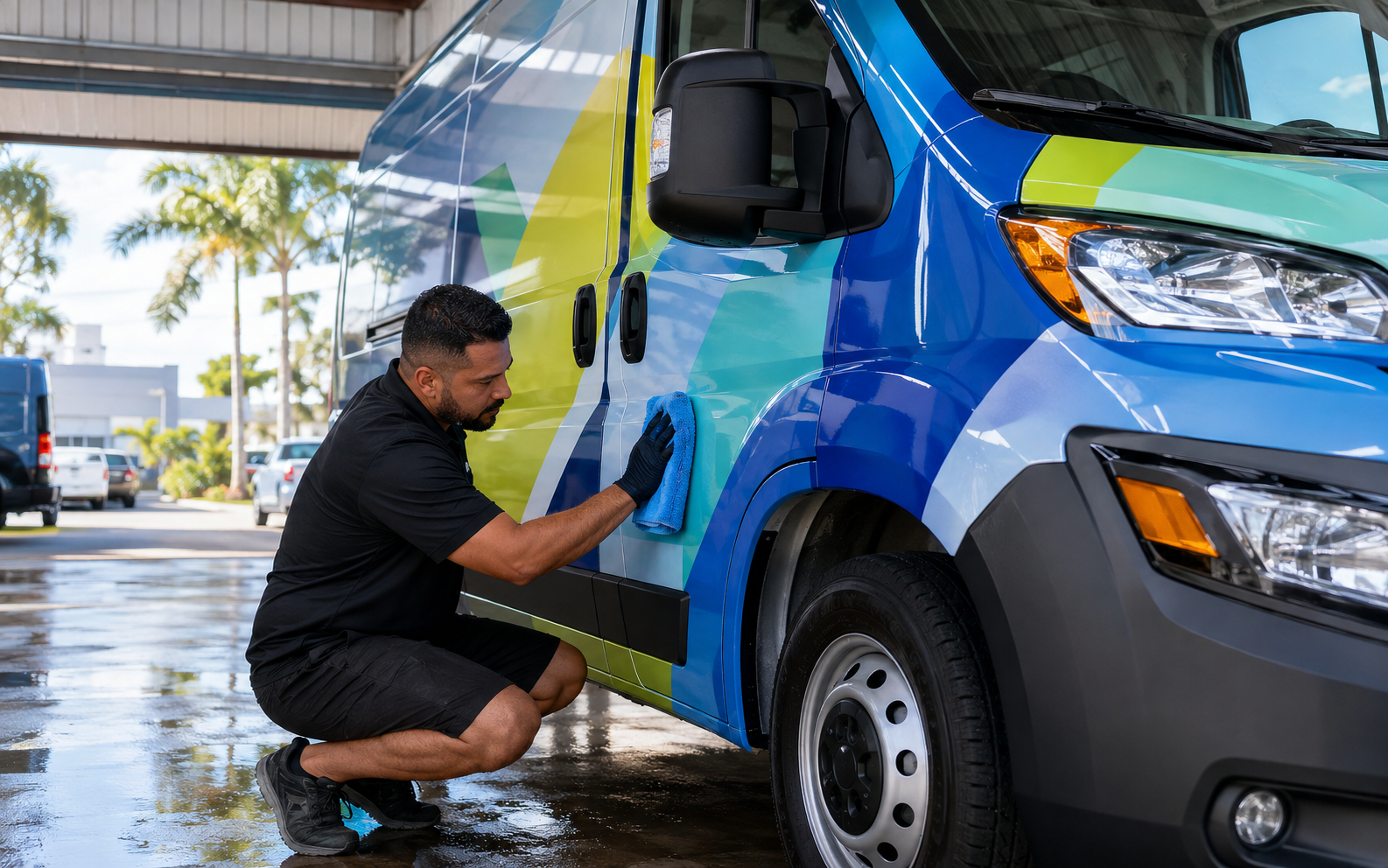
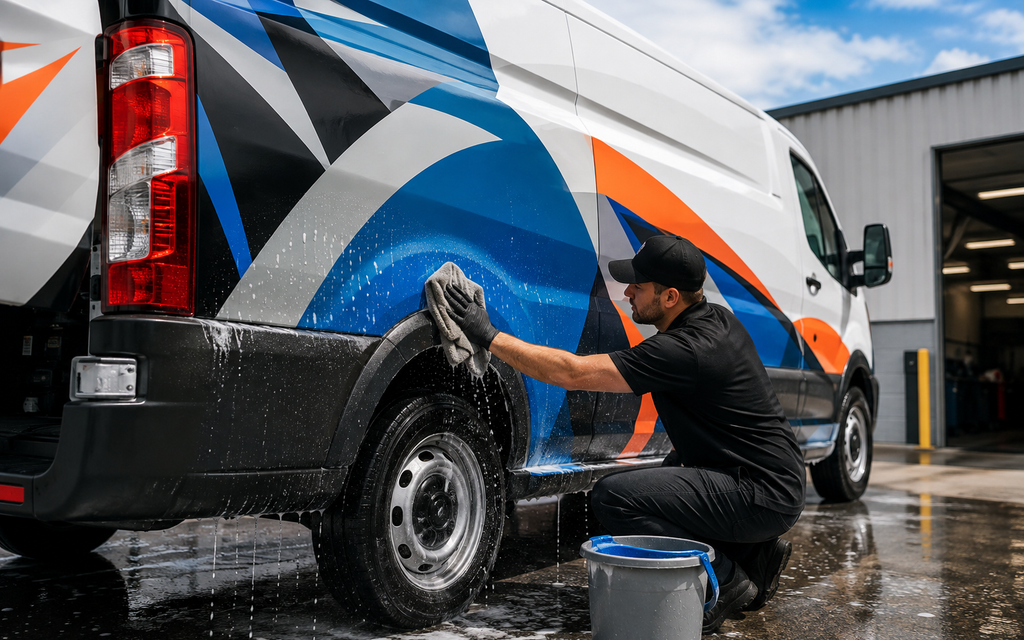
The safest approach is usually a gentle hand wash using products specifically designed or approved for automotive vinyl.
Before touching the surface, rinse the vehicle thoroughly with clean water to remove loose dust, sand, and road debris. This reduces the risk of dragging abrasive particles across the vinyl while washing.
Use a mild automotive soap and a soft wash mitt or microfiber cloth. Work from the top of the vehicle downward so dirty water does not continually run across areas you have already cleaned.
Avoid aggressive scrubbing. Even when dealing with stubborn dirt, excessive friction can damage the vinyl or alter the finish of matte and satin films.
After washing, rinse the entire vehicle thoroughly with clean water to remove all soap residue. Leaving detergent on the surface may cause streaking or water spots, especially when cleaning your vehicle under direct sunlight.
Whenever possible, wash the vehicle in a shaded area and dry it using a clean microfiber towel.
If water remains in flat areas or around trim, some installers may use a silicone squeegee designed for delicate automotive surfaces, although microfiber drying is often sufficient for everyday maintenance.
The goal is simple: wash your car gently, remove contaminants early, and avoid anything that creates unnecessary abrasion.
Can You Use an Automatic Car Wash on a Wrapped Vehicle?
An automatic car wash is convenient, but it is not usually the safest option for a wrapped vehicle.
Traditional brush car washes use rotating equipment that repeatedly makes contact with the vehicle. Those brushes can collect dirt and abrasive debris from previous vehicles. When they move across the vinyl wrap, they may cause micro-scratches, dull certain finishes, or catch exposed edges.
In addition, high-pressure water directed into seams or corners may gradually lift sections of the wrap film.
This does not mean every automatic car wash will immediately ruin a wrap. However, repeated exposure increases unnecessary risk.
If you cannot wash the vehicle by hand, a touchless car wash is generally preferable because it avoids mechanical brushes. Even then, inspect the wrap afterward, particularly around:
- Door edges
- Mirrors
- Bumpers
- Wheel arches
- Panel seams
- Corners
- Trim
Brush car washes may seem harmless when the wrap is new, but repeated mechanical contact can accelerate wear.
For the best results, hand washing remains the preferred way to protect your wrap.
How Should You Spot Clean Bird Droppings, Sap, and Other Contaminants?
Some substances should be removed as soon as possible rather than waiting until your next full wash.
Common examples include:
- Bird droppings
- Bug splatter
- Fuel residue
- Road tar
- Pollen
- Sap
- Salt
- Mud
- Industrial fallout
These contaminants can become harder to remove when exposed to heat and sunlight. In South Florida, where vehicles may remain hot for long periods, organic contamination can dry quickly onto the vinyl.
The safest approach is to spot clean the affected area.
Start by softening the residue with warm soapy water or a cleaner formulated for vinyl. Allow it to sit briefly instead of immediately scrubbing.
Then use a clean microfiber cloth to wipe the area gently. Repeat the process if necessary.
For tree sap, avoid scraping the surface with hard plastic tools, fingernails, razor blades, or abrasive pads. If normal washing does not remove it, use a wrap-safe cleaner recommended by the vinyl manufacturer or installer.
Cleaning contaminants quickly can help keep your vinyl looking better while reducing the chance of permanent staining.
The rule is simple: remove the contaminant without trying to overpower it mechanically.
Can You Pressure Wash a Vehicle Wrap Without Damaging the Vinyl?
A pressure washer can be used on some wrapped vehicles, but it requires considerably more caution than a regular hose.
Too much pressure, excessive heat, a narrow nozzle, or holding the spray too close can force water underneath seams and edges. This can damage the wrap, particularly in high-stress areas such as bumpers, wheel arches, mirrors, and door handles.
Never aim concentrated pressure directly underneath an exposed vinyl edge.
If you need to pressure wash the vehicle, use moderate pressure, a wider spray pattern, and keep sufficient distance from the surface. Direct the spray toward the face of the graphic rather than pushing water toward its edges.
For routine maintenance, a hose and gentle hand washing are usually safer.
If the wrap already has lifting corners, wrinkles, or damaged edges, pressure washing should be avoided until a professional evaluates it.
The most effective way to clean a vehicle is not necessarily the fastest or most powerful method. The objective is to remove dirt without damaging the vinyl.
Should You Use Wax on Car Wrap Vinyl?
Whether you should apply wax depends on the specific material and finish.
Traditional automotive wax is primarily designed for car paint, not every type of vinyl film. Some waxes may be suitable for certain glossy wraps, while others can leave residue, alter texture, or create uneven shine.
The risk is particularly important with:
- Matte vinyl
- Satin vinyl
- Textured finishes
- Chrome films
- Metallic materials
- Specialty vehicle vinyl
Using conventional wax on a matte film, for example, may create glossy patches that are difficult or impossible to reverse.
Before using any product, verify that it is compatible with your specific car wrap vinyl.
Manufacturers such as 3M publish care recommendations for their vinyl films, and your installer should also be able to recommend appropriate cleaning and protection products.
The safest approach is not to assume that a product that works on automotive paint will also work on a vinyl wrap.
With the right care, specialized wrap-safe sealants may help protect the surface without changing its appearance.
Is a Ceramic Coat Worth It for a Wrapped Car?
A ceramic coat formulated specifically for vinyl can provide another layer of protection over the wrap.
Ceramic coatings can make the surface more hydrophobic, helping water and some contaminants release more easily during washing. They may also reduce the amount of dirt that bonds directly to the material.
However, a ceramic coat should not be treated as a substitute for proper maintenance.
A coated wrap can still be damaged by automatic brushes, harsh chemicals, poor washing techniques, prolonged contamination, or excessive pressure.
Compatibility is also important.
The coating should be appropriate for the exact finish of the film. Products used on gloss vinyl may behave differently on matte or satin surfaces.
If you are considering ceramic protection for a wrapped car, speak with the wrap installer before applying it. A professional can determine whether the product is appropriate for your material and whether additional surface preparation is required.
Used correctly, ceramic protection can make routine cleaning easier and help protect the vinyl, but it cannot compensate for poor maintenance practices.
How Can You Protect Your Car Wrap From the Miami Sun?
South Florida creates a demanding environment for any exterior automotive material.
Strong sunlight and UV radiation, high temperatures, humidity, heavy rain, airborne contaminants, salt exposure near coastal areas, and frequent outdoor parking all influence how a car wrap ages.
One of the most effective ways to protect your car wrap is reducing unnecessary UV exposure.
Whenever possible:
- Park your car in a garage.
- Choose covered parking.
- Use shaded parking areas.
- Avoid leaving the vehicle outdoors unnecessarily for long periods.
- Consider a breathable car cover when appropriate.
- Remove contaminants before they bake onto hot vinyl.
You obviously cannot eliminate sun exposure from a working commercial vehicle. A wrap exists to be seen.
The objective is to reduce exposure when the vehicle is not being used.
For example, a business van may spend eight hours per day on Miami roads. Keeping it indoors overnight can still substantially reduce its overall exposure.
Small operational habits can help a wrap last longer and preserve stronger colors over time.
Good installation, premium vinyl, and proper maintenance all work together. No single measure provides complete protection.
What Car Wrap Maintenance Mistakes Can Harm Your Wrap?
Most owners do not intentionally harm your car wrap. Instead, problems usually develop from repeated habits that seem harmless.
One of the most common mistakes is waiting too long to clean the vehicle.
If you only wash whenever the car appears dirty, contaminants may remain on the surface much longer than they should. Bird waste, insects, fuel residue, and organic material can damage or stain vinyl even when the rest of the vehicle looks relatively clean.
Other mistakes include:
- Using abrasive pads or brushes
- Applying harsh household cleaners
- Scraping dried contaminants
- Using extremely hot water
- Washing under intense sunlight
- Directing pressure washers into edges
- Leaving fuel residue near the filler cap
- Applying unsuitable wax
- Ignoring lifted corners
- Repeatedly using automatic brush washes
Another common error is confusing vinyl care with paint correction.
A vinyl film is a layer of vinyl applied over the vehicle’s surface. It should not normally be polished aggressively like clear-coated automotive paint.
If you are unsure whether a stain, scratch, or defect can be safely corrected, contact a professional before experimenting.
The cost of professional advice is much lower than replacing a damaged panel.
How Do You Keep Your Car Wrap Looking New Between Washes?
You do not necessarily need to perform a full wash every time you see a small spot.
Routine inspections and quick cleaning can help prevent minor contamination from developing into larger problems.
Carry a clean cloth or microfiber towel and an approved wrap-safe detailing product in the vehicle. This is particularly useful for commercial vehicles that spend most of the day on the road.
If you notice bird droppings or bug residue, spot clean the area before it hardens.
When you perform a full wash, clean the wrap thoroughly, including lower panels where road grime tends to accumulate.
Then rinse the surface thoroughly with clean water.
Regular maintenance does not need to be complicated. Consistency matters more than aggressive detailing.
A simple routine can help keep your wrap looking cleaner and more professional with less effort.
How Should Businesses Maintain Commercial and Fleet Vehicle Wraps?
Commercial wraps require a slightly different strategy because multiple drivers and vehicles may be involved.
A company may invest in consistent branding across several vans, trucks, or service vehicles, only to have each vehicle maintained differently.
The solution is a simple fleet care protocol.
Drivers should know:
- Which cleaning products are approved
- When vehicles should be washed
- How quickly to remove bird waste and fuel
- Which car washes are prohibited
- How to report peeling or damaged vinyl
- Where wrapped vehicles should be parked
- When professional inspection is necessary
A regular thorough clean helps maintain consistency across the fleet.
This matters because fleet graphics are not just decoration. They are mobile advertising.
Every wrapped van driving through Miami represents your company. A clean vehicle reinforces the impression of an organized, detail-oriented business. A damaged or faded vehicle communicates something very different.
For high-use fleets, periodic professional inspections can also identify issues before they become expensive repairs.
Maintaining consistency across your fleet is one of the easiest ways to maximize the advertising value of your investment.
When Should a Vehicle Wrap Be Repaired or Replaced?
Even with excellent maintenance, no exterior film lasts indefinitely.
Over time, environmental exposure, mileage, physical wear, and UV radiation gradually affect the material.
Watch for signs such as:
- Significant fading
- Cracking
- Brittle edges
- Peeling
- Large bubbles
- Failed seams
- Permanent staining
- Damaged laminate
- Extensive scratches
- Graphics that no longer match your brand
If a small section begins peeling, do not pull on it.
A professional installer may be able to repair the area before the problem spreads.
The idea that a wrap can last a specific number of years under every condition is misleading. Actual lifespan depends on film quality, installation, vehicle usage, orientation of panels, storage conditions, climate, and maintenance.
Horizontal surfaces such as roofs and hoods often experience greater environmental exposure than vertical doors or side panels.
In Miami, these differences can become even more important because of intense sunlight.
The best approach is regular inspection combined with professional intervention when necessary.
Professional Vehicle Wraps in Miami From Graphic Arts 305
Proper maintenance begins after installation, but long-term performance starts with the quality of the original wrap.
Professional preparation, high-quality materials, correct printing, lamination, and expert installation all influence how well the graphics perform.
Graphic Arts 305 provides custom vehicle wrap solutions in Miami for cars, vans, trucks, trailers, and commercial fleets.
With more than 25 years of experience in the graphic arts industry, we work with premium materials from trusted manufacturers including 3M, Avery Dennison, and Arlon to create professional vehicle graphics designed for demanding commercial environments.
Whether you need a single branded van or a complete fleet transformation, the objective is the same: create graphics that capture attention while maintaining a polished professional appearance.
And once those graphics are installed, knowing how to care for your vehicle becomes part of protecting that investment.
If your current wrap is damaged, faded, outdated, or no longer reflects your brand, our team can help you evaluate your options.
Get a free quote today and turn your vehicle into a professional mobile advertisement for your business.
Key Takeaways: How to Maintain Vehicle Wraps
- Gentle, regular cleaning is one of the best ways to keep your car wrap in good condition.
- Hand washing is generally safer than traditional automatic brush systems.
- Use mild cleaners and microfiber materials rather than aggressive or abrasive products.
- Remove bird droppings, bug residue, fuel, and other contaminants quickly.
- Be cautious when using a pressure washer around vinyl edges and seams.
- Do not assume ordinary automotive wax is suitable for every vinyl finish.
- A vinyl-compatible ceramic coat can add protection and make cleaning easier.
- Covered parking can reduce unnecessary UV exposure in Miami and South Florida.
- Regular inspections help identify lifting or damage before problems spread.
- Fleet operators should create standardized maintenance procedures for drivers.
- Good maintenance can help protect the wrap and preserve your company’s professional image.
- Quality materials, professional installation, and consistent care methods work together to maximize wrap performance.
- Learning how to properly care for your vehicle wrap is essential if you want to maintain its appearance and protect your investment.