The right office wall can do much more than fill an empty surface. With strategic office wall decor, custom graphics, artwork, typography, and branded visual elements, businesses can turn ordinary interiors into memorable environments that communicate personality and reinforce company culture.
From a bold wall decal in a reception area to immersive office wall graphics, branded murals, company timelines, abstract patterns, and a custom vinyl wall, there are countless ways to improve modern office spaces without undertaking a full renovation.
This guide explores practical and creative office wall decor ideas for businesses looking to improve their workplace, strengthen their brand, and create a more engaging environment for employees, visitors, and clients.
Article Outline
- Why does office wall decor matter in modern workspaces?
- How can office wall graphics strengthen your brand?
- What are the best creative office wall ideas for reception spaces?
- Should you use motivational quotes and typography?
- How can wall art and abstract graphics improve office spaces?
- What office wall ideas work best for meeting rooms and common areas?
- Are biophilic and textured walls a growing office design trend?
- How can you decorate a small office or home office wall?
- Wall decals, custom graphics, or dimensional decor: which should you choose?
- How do you create office wall decor that looks professional and lasts?
Why Does Office Wall Decor Matter in a Modern Workspace?
A modern workspace is no longer designed only around desks, chairs, computers, and meeting rooms. The visual environment surrounding employees and visitors has become an important part of the overall workplace experience.
Thoughtful office wall decor can make an interior feel more intentional, professional, and connected to the company’s identity. An empty wall might be functional, but it rarely communicates anything meaningful about the organization occupying the space.
The strongest office wall treatments balance aesthetics and purpose. Some walls may reinforce company culture, while others provide direction, inspire employees, improve reception spaces, or simply create visual interest.
Modern office design often incorporates custom graphics, wall art, environmental branding, natural elements, and carefully selected materials as part of a larger interior design strategy. Rather than decorating every available surface, effective workplaces prioritize the walls that have the greatest visual and functional impact.
How Can Office Wall Graphics Strengthen Your Brand?
One of the most valuable uses of office wall graphics is reinforcing a company’s visual identity throughout the physical workplace.
A business can translate its logo, colors, shapes, illustrations, photography, messaging, and brand identity into large environmental graphics. This creates a stronger connection between the brand people see online and the environment they experience in person.
A well-designed custom wall may include an oversized logo, branded patterns, product illustrations, corporate photography, or visual storytelling related to the organization’s history or services.
The objective should not be to make every surface look like an advertisement. Strong environmental branding is often more subtle. A company can transform recognizable elements from its visual system into patterns, colors, or abstract shapes that feel naturally integrated into the architecture.
For a custom office, this approach can help create consistency across reception areas, corridors, collaborative zones, and conference spaces.
What Are the Best Creative Office Wall Ideas for Reception Areas?
Reception areas deserve special attention because they frequently create the first physical impression of a company.
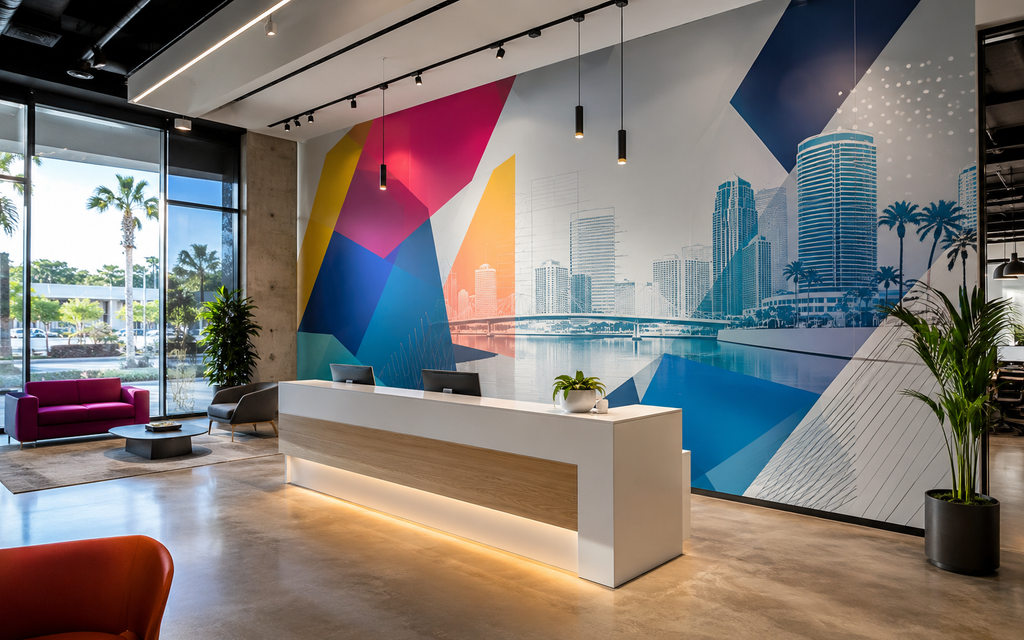
A creative office wall behind the front desk can immediately communicate confidence, professionalism, and personality. One of the most effective approaches is combining a logo with a large branded backdrop instead of placing a small sign on an otherwise empty wall.
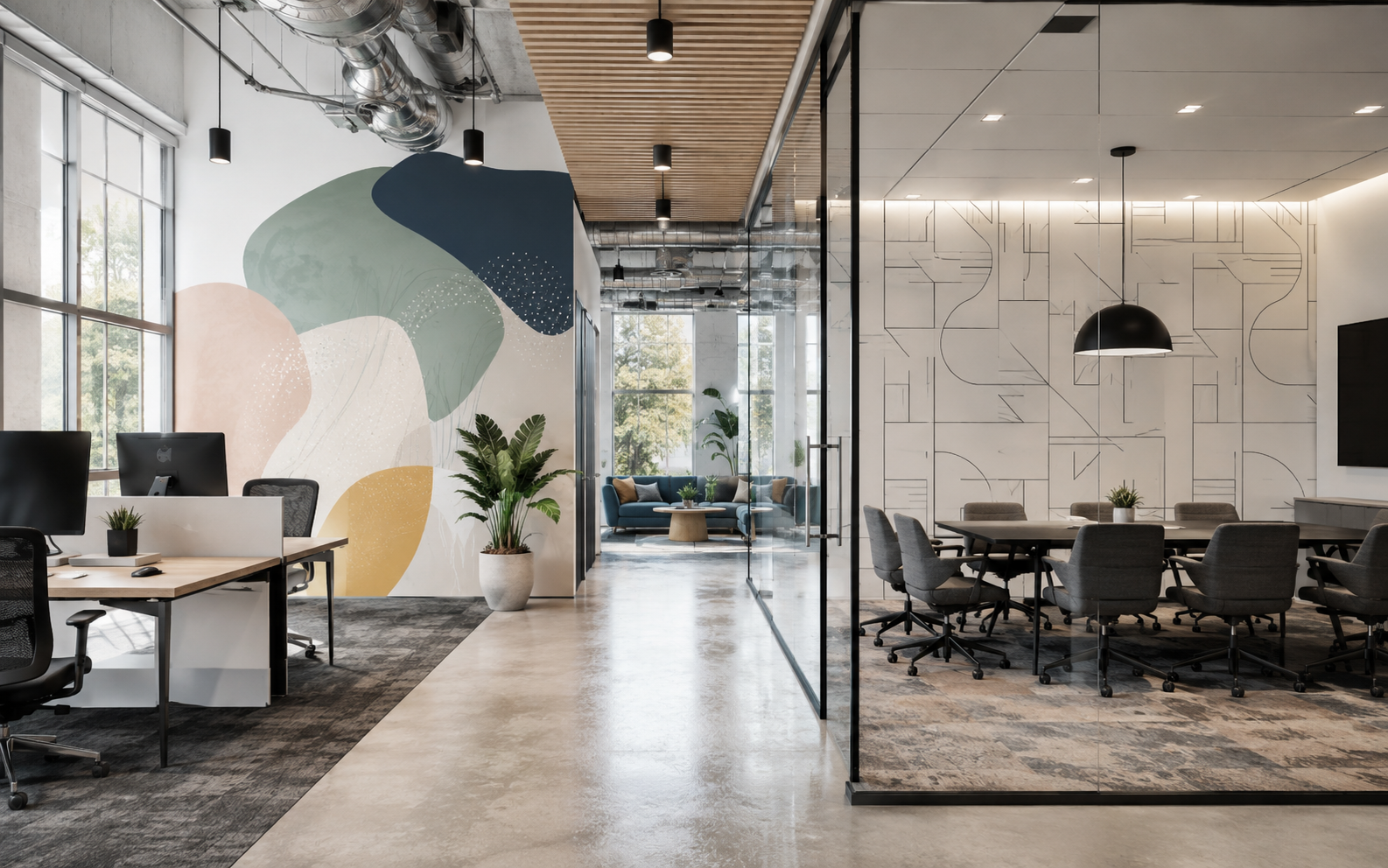
For example, businesses can create an accent wall using custom patterns, photography, an abstract mural, geographic elements, or an oversized version of the company logo.
A large wall in a reception area can also become a storytelling surface. You might feature a company timeline, major milestones, locations served, signature projects, or a short statement explaining what your organization represents.
Some businesses also use reception areas to create a visually distinctive photo opportunity. A strategically positioned logo, branded pattern, or inspiring wall can provide a natural background for team photos, visitor pictures, and social media content.
When evaluating ideas for office reception spaces, think beyond decoration. Ask what you want someone to understand about your organization within the first few seconds of entering the building.
Should You Use Motivational Quotes and Typography on Office Walls?
A motivational wall can work well, but only when the message genuinely reflects the organization.
Generic phrases copied from common posters can quickly make an office feel impersonal. Instead, choose motivational quotes, company principles, customer promises, or short statements that employees actually recognize as part of the organization’s culture.
Large-scale typography can transform a simple office wall into a strong visual feature. A single word, phrase, or even a carefully designed letter can become part of a larger composition using color, illustration, shapes, or photography.
The key is to avoid overcrowding. A motivational office wall generally works best when there is a clear hierarchy and sufficient negative space around the message.
Inspirational quotes can also be incorporated into corridors, employee lounges, creative departments, or collaborative spaces. The goal should be inspiration through relevance rather than decoration for decoration’s sake.
How Can Wall Art and Abstract Graphics Improve Office Spaces?
Not every visual element needs to communicate a corporate message directly.
Well-selected wall art can improve the atmosphere of a workplace while supporting the architecture and overall visual identity.
For contemporary environments, abstract wall art and modern wall art are particularly versatile because they can introduce shape, movement, color, and visual texture without dominating the room.
A large-scale piece of abstract art can work especially well in executive offices, waiting rooms, corridors, and collaborative areas.
Businesses may also experiment with framed art prints, photographic installations, metal wall art, or even geometric metal pieces when a more architectural look is appropriate.
Other styles such as boho wall art, floral wall art, or traditional art home decor may work better in wellness offices, creative studios, hospitality environments, or residential-style workplaces than in highly corporate settings.
For most businesses, the important distinction is between decoration chosen randomly and office wall art selected as part of a cohesive visual strategy.
What Wall Graphics Work Best in Meeting Rooms and Common Areas?
Different areas of a workplace can serve different visual purposes.
Meeting rooms are ideal for more subtle branded graphics because clients and employees spend longer periods looking at the surrounding environment.
Instead of a large promotional message, consider a restrained brand pattern, architectural photography, company history, local imagery, a map, or a minimalist graphic treatment.
Common areas can usually support more expressive designs. Employee lounges, collaborative zones, kitchens, and creative spaces are good locations for colorful patterns, illustrations, photography, or graphics related to company culture.
Long corridors can also become useful wall displays. A timeline, series of project images, department information, company values, or continuous graphic composition can turn an otherwise overlooked passage into part of the office experience.
Companies with multiple teams may even give different areas distinct designs while using the same colors, texture, typography, and visual system throughout the office.
These types of creative office wall design ideas provide variety without sacrificing consistency.
Are Biophilic Design and Textured Walls a Growing Office Trend?
Yes. Natural and dimensional elements have become increasingly common in modern workspaces because businesses are looking for ways to make interiors feel warmer and less sterile.
Biophilic design introduces visual references to nature through plant imagery, natural patterns, landscapes, organic shapes, living walls, or botanical graphics.
A wall mural featuring tropical vegetation, forests, ocean textures, or abstract natural forms can help create a calmer visual atmosphere. Real plants may also improve air quality, while vertically arranged botanical elements can add vertical interest to otherwise flat interiors.
Businesses can also introduce texture through printed graphics that simulate wood, stone, concrete, fabric, or other surfaces.
For more architectural installations, 3D wall panels, sculptural pieces, and dimensional elements can create shadow and depth.
This trend works particularly well when businesses want a premium look without relying exclusively on conventional signage or printed artwork.
However, textured and dimensional decor generally requires more installation planning than printed graphics, so businesses should consider maintenance, cleaning, accessibility, and the physical characteristics of the wall before choosing these solutions.
What Are the Best Office Wall Ideas for a Small Office or Home Office?
A small office requires a different strategy from a large corporate environment.
When space is limited, avoid covering every surface with competing visual elements. Instead, select one focal wall and give it a clear purpose.
A home office wall might include a restrained mural, company logo, gallery wall, framed artwork, a functional planning board, or strategically placed wall shelves.
For a home office, a subtle wall decal or smaller graphic installation can provide visual personality without overwhelming the room.
Businesses or professionals seeking wall decor for home environments should also consider what appears behind them during video calls. A well-designed background with appropriate wall hanging, artwork, shelving, or subtle branding can improve how a professional setting appears on camera.
A shelve or compact wall-mounted storage solution can add functionality while keeping floor space clear.
For businesses operating within a limited renovation budget, a budget-friendly office wall can often be created using selective graphics rather than covering the entire room.
A smaller branded feature wall can still deliver significant visual impact.
Wall Decal, Custom Graphics, or Dimensional Decor: Which Should You Choose?
The right solution depends on the size of the wall, visual objective, budget, existing architecture, and expected lifespan.
A wall decal usually works well when you want to apply individual elements such as logos, lettering, icons, phrases, or smaller decorative graphics.
Vinyl wall decals can provide flexibility and are often appropriate for targeted installations rather than full-wall coverage.
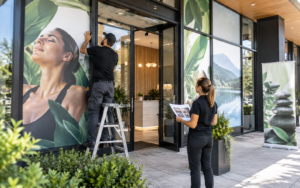
For larger environments, custom graphics and large-format wall wraps provide greater freedom. They can incorporate complete murals, photography, abstract patterns, company timelines, cityscapes, or environmental branding across significant wall areas.
A full wrap can create a much more immersive visual effect than individual decals.
For businesses seeking physical depth, dimensional signs, panel systems, wall-art, sculptures, or other three-dimensional installations may be appropriate.
These options can produce a premium appearance but often require additional planning, hardware, and installation.
Meanwhile, wall shelves and decorative installations can combine function and aesthetics.
The choice should begin with what the wall needs to accomplish rather than which material happens to be popular.
How Can You Create an Office Wall Design That Looks Professional?
Professional office wall design depends on much more than choosing an attractive image.
The graphic needs to work at the actual scale of the environment.
Before production, consider viewing distance, wall dimensions, ceiling height, doorways, furniture, electrical fixtures, windows, lighting, and architectural obstacles.
One common mistake is designing graphics that look impressive on a computer screen but appear undersized when installed on a full office wall.
Another is using low-resolution photography that loses detail during enlargement.
Professional wall production requires appropriate artwork preparation, accurate measurements, suitable materials, proper wall preparation, and precise installation.
The surface itself matters as well. Paint condition, moisture, wall finish, and existing texture can influence how adhesive graphics perform.
The final result should also be easy to maintain, particularly in busy commercial environments where walls are exposed to frequent contact, cleaning, or changing displays.
The best office installations feel intentional because artwork, branding, furnishings, signs, and architecture work together rather than competing for attention.
What Are Some Unique Wall Decor Ideas for Offices?
Businesses looking for a more memorable unique wall can combine several visual approaches rather than relying on a standard logo installation.
A company might create a map showing where it operates, a customer story wall, an employee recognition display, a collection of product photography, or an illustrated timeline of its history.
A technology company could use data-inspired graphics. A logistics company might create a global route map. A construction company could feature completed projects. A Miami business might incorporate local architectural patterns, tropical visual elements, or an abstract interpretation of the city.
You can also combine print with physical elements. For example, a mural can provide the background for dimensional lettering or branded signage.
For more flexible installations, removable panels or modular wall displays can allow content to change over time.
Whatever the concept, the strongest office wall ideas come directly from the identity, culture, customers, or environment of the company rather than generic trends.
Custom Office Wall Graphics in Miami
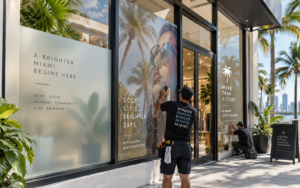
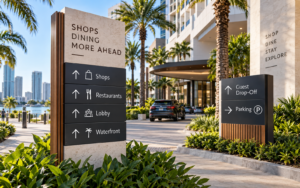
For Miami businesses, custom walls can turn offices, reception areas, conference rooms, retail environments, and commercial interiors into spaces that communicate something more memorable.
Graphic Arts 305 produces custom large-format graphics and wall wraps for businesses looking to improve their physical environment through branding, visual storytelling, and professional print production.
Whether you are planning one branded feature wall or a complete environmental graphics project, the design should consider your architecture, existing branding, viewing distance, artwork quality, wall surface, and installation conditions from the beginning.
A professionally produced wall graphic should feel like part of the environment rather than an element added afterward.
Get a free quote today!
Key Takeaways: Office Wall Decor Ideas to Remember
- Treat each office wall as part of the customer and employee experience.
- Use reception walls to reinforce your brand and create a stronger first impression.
- Combine logos with patterns, photography, graphics, and visual storytelling instead of relying only on traditional signs.
- Use large-scale artwork carefully to avoid overwhelming the workspace.
- Consider company values and authentic messaging before adding motivational phrases.
- Use subtle designs in meeting rooms and more expressive treatments in collaborative areas.
- Introduce natural imagery or biophilic elements when you want to soften a corporate environment.
- Choose a focal surface when decorating smaller offices or home-office environments.
- Use decals for individual elements and full wall wraps for immersive large-scale graphics.
- Think about artwork resolution, wall surface, scale, and installation before producing graphics.
- Balance branding and decoration so your office feels designed rather than advertised.
- Create a visual system that connects reception areas, workspaces, hallways, and other office areas without making every wall identical.