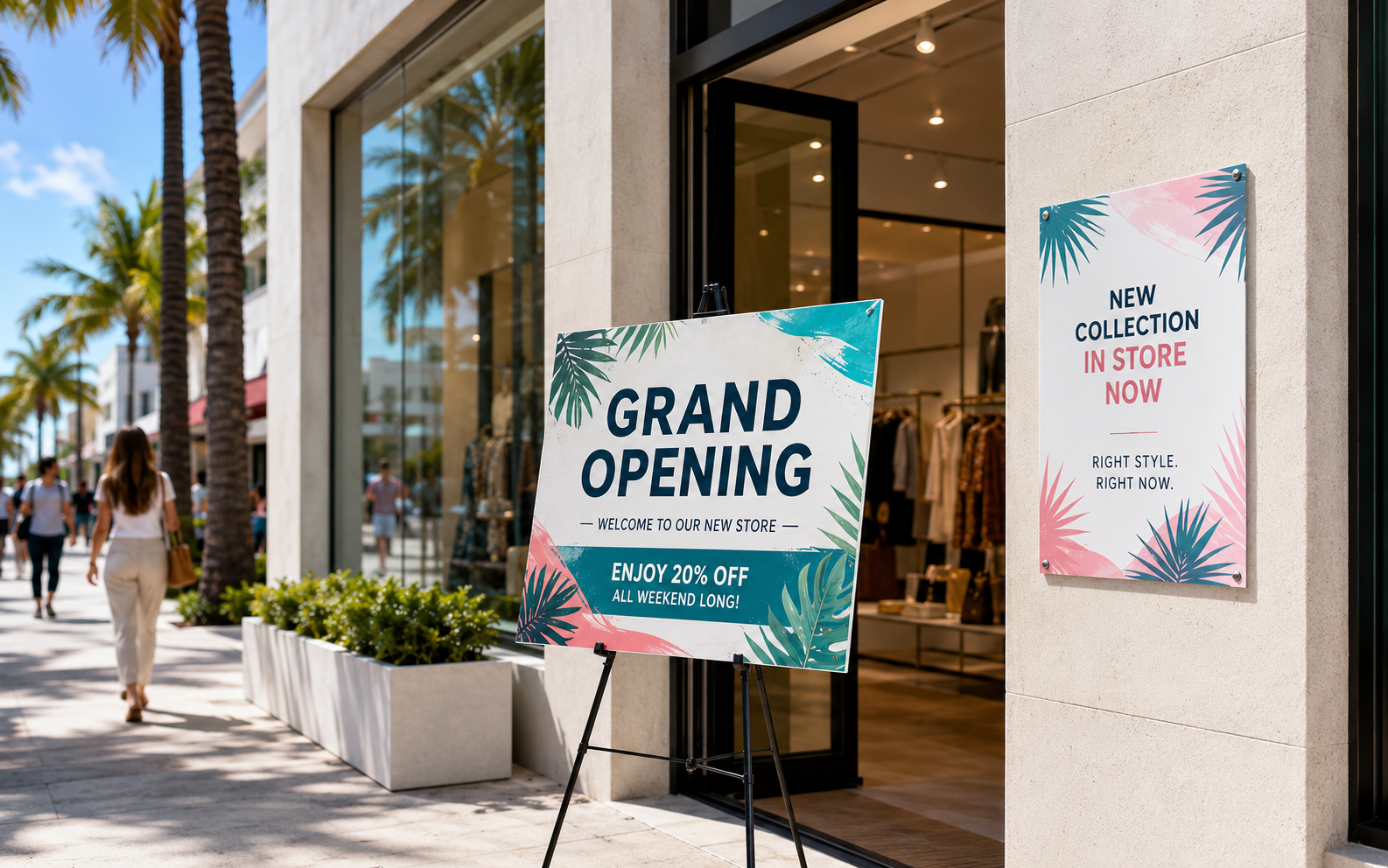
A professionally produced PVC sign gives businesses a clean, versatile and reliable way to communicate with customers. From a rigid 3mm PVC board for a retail promotion to custom PVC signs for offices, events and commercial properties, this material can support both temporary campaigns and long-term branding.
This article explains how PVC signage works, where it performs best and how it compares with banners, foam board and coroplast signs. It is worth reading before ordering because the right material, thickness, print method and installation can determine whether a sign looks professional, survives its environment and delivers a return on the investment.
Article Outline
- What is a PVC sign and how is it manufactured?
- Why are Miami businesses choosing custom PVC signage?
- Is PVC suitable for indoor and outdoor signs?
- What thickness should you choose, including 3mm?
- PVC versus Coroplast: which material is better?
- How does professional sign printing improve image quality?
- Where can custom printed PVC be used?
- Are PVC signs suitable for real estate and directional applications?
- How should office signage and trade show displays be designed?
- What should you consider before ordering from a Miami print company?
What Is a PVC Sign and How Is It Manufactured?
A PVC sign is produced from a rigid sheet of polyvinyl chloride, a lightweight synthetic material widely used for visual communication. In the sign industry, expanded PVC is also commonly known by brand or category names such as Sintra. Its smooth surface makes it suitable for direct digital printing, mounted vinyl graphics, lettering and contour cutting.
The manufacturing process may involve printing directly onto the PVC material with UV ink, applying a printed adhesive layer or adding a decal to the surface. Direct printing creates a clean result because the image becomes part of the panel rather than appearing as a separate paper poster. Depending on the project, the sign may also receive drilled holes, rounded corners, custom routing or a protective coating.
PVC is available in a variety of sizes and thicknesses. A lighter sheet works well for framed graphics, menu boards and short-term displays, while a thicker panel may be needed for freestanding use or larger formats. The finished product is rigid, smooth and highly customizable, making it suitable for businesses that need a more polished presentation than ordinary paper or cardboard can provide.
Why Are Miami Businesses Choosing Custom PVC Signage?
Businesses compete for attention in busy commercial areas, shopping districts and event environments. A poorly printed notice or warped board can damage the perception of the company before a customer even enters. Professionally designed custom PVC signage gives brands a more intentional and established appearance.
Retailers, service providers and property managers use rigid panels to display promotions, instructions, schedules and branded messaging. Restaurants can install menu graphics, clinics can organize patient flow, and retail storefronts can promote seasonal campaigns. A carefully designed sign improves brand visibility while helping people understand what the business offers.
Local production also simplifies communication. Working with a company experienced in printing in Miami allows clients to discuss installation conditions, dimensions and deadlines before production. A knowledgeable printer can recommend a lighter panel for an easel, a thicker substrate for a wall display or another material when PVC is not the best option.
Is PVC Signage Suitable for Indoor and Outdoor Signs?
PVC is frequently selected for indoor and outdoor projects, but that does not mean every board should be installed in every environment. Inside a building, PVC is protected from strong wind, direct rain and prolonged sunlight. This makes it suitable for reception areas, retail promotions, menu panels and branded wall graphics.
For outdoor use, the expected exposure must be evaluated carefully. Florida heat, humidity, intense sunlight and storms can affect any substrate. Direct printing with uv-resistant inks and proper mounting can improve performance, but a large unsupported board may still bend or move in strong wind.
For demanding outdoor applications, the complete installation matters more than the substrate alone. The board must have the right thickness, fasteners and structural support. In some cases, aluminum composite panels or another heavy-duty material will perform better than PVC. Professional guidance prevents businesses from ordering a lightweight sign for a location that requires permanent outdoor signage.
What PVC Board Thickness Should You Choose, Including 3mm?
The correct thickness depends on the dimensions, location and support system. A 3mm panel is lightweight and practical for wall-mounted graphics, tabletop displays, menu boards and promotional pieces that will not be exposed to strong physical pressure.
A 3mm PVC board may also be suitable for event graphics, framed advertising or small directional panels. However, increasing the overall dimensions without increasing the thickness can make the sign less rigid. A wide board installed without enough support may flex even when the material itself is considered durable.
Thicker panels can provide greater stability for hanging installations, freestanding graphics and displays used repeatedly. The most expensive option is not automatically the correct one. The goal is to match the substrate to the sign’s dimensions, expected lifespan and mounting system so the final piece feels solid and built to last.
PVC Sign or Coroplast Signs: Which Material Is Better?
PVC and Coroplast are both forms of plastic signage, but their structures and ideal applications are different. PVC has a smooth, solid-looking surface. Coroplast is made from corrugated plastic, with internal flutes that reduce weight and production cost.
Coroplast is commonly used for yard signs, political campaigns, temporary event notices and short-term promotions. It is economical, lightweight and easy to install on wire stakes. For projects that prioritize affordability and quick distribution, it can be the more practical choice.
PVC generally offers a more refined appearance for retail interiors, exhibitions and office environments. It tends to look smoother at close viewing distances and can feel more substantial than a fluted panel. Neither material is universally better. The right choice depends on whether the priority is presentation, durability, budget, portability or exposure to the elements.
How Does Professional Sign Printing Improve Image Quality?
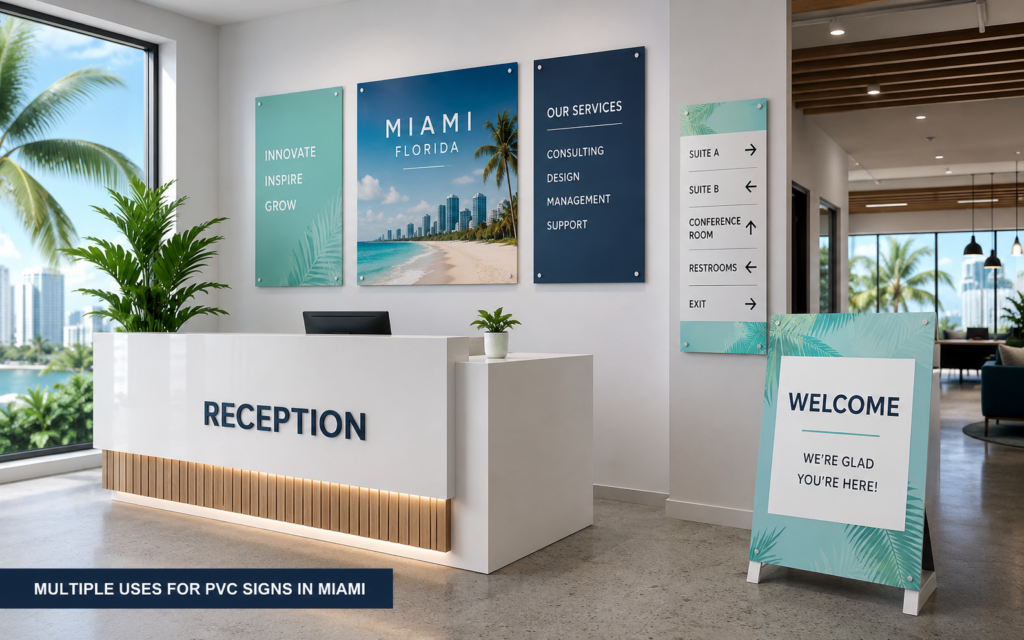
Professional sign printing is not simply a matter of enlarging a design and pressing print. Artwork must be prepared at the correct dimensions, resolution and color settings. Small logos downloaded from a website often become pixelated when enlarged, while thin fonts may lose readability at a distance.
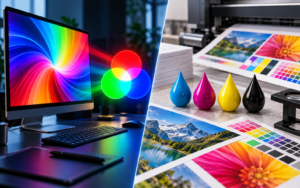
Modern large format printing allows businesses to reproduce logos, photographs, icons and typography across substantial surfaces. Direct printing can produce signs printed in full color with sharp edges and consistent coverage. Proper curing helps the ink bond to the panel, reducing the risk of smearing during handling.
Finishing choices also affect appearance. A matte finish can reduce glare in brightly lit interiors, conference rooms and storefront windows. A gloss surface may intensify colors but can create reflections depending on the viewing angle. The best option should be chosen according to lighting, viewing distance and the brand’s visual identity.
Where Can Custom Printed PVC Signs Be Used?
A custom printed PVC panel can serve many commercial purposes. Retailers can use it for sale announcements, product launches and promotional displays. Restaurants may install menus, pickup instructions or daily offers. Service businesses can display pricing, policies and business hours.
The material is also useful for exhibitions and events. A rigid panel can be placed on an easel, incorporated into a booth, attached to a display wall or positioned beside a backdrop. It can complement a fabric banner, pop-up display or branded counter without curling like a lightweight poster.
PVC can also support broader signage and promotional materials strategies. Companies may coordinate wall panels with window graphics, floor graphics, brochures, marketing materials and even a branded mural. This consistency creates a stronger visual system and a more memorable customer experience.
Are PVC Signs Suitable for Real Estate Signs and Wayfinding?
PVC can be used for selected real estate signs, particularly in leasing offices, property presentations, open houses and interior sales galleries. Full-color panels can display floor plans, architectural renderings, neighborhood maps and contact information.
For long-term exterior real estate signage, the installation conditions should be examined first. A panel exposed to wind and rain may need additional support or a more rigid material. Temporary outdoor listings may also be better suited to Coroplast or aluminum composite, depending on the expected lifespan.
PVC performs especially well for directional signs and wayfinding inside buildings, events and commercial facilities. Clear arrows, room names, icons and instructions can reduce confusion in high-traffic environments. Hospitals, schools, hotels and office complexes can use a coordinated visual system to guide visitors from entrances to reception desks, elevators and specific departments.
How Should Office Signage and Trade Show Displays Be Designed?
Effective office signage should support the brand without overwhelming the space. A corporate office may use PVC panels for mission statements, departmental identification, workplace policies and branded graphics in reception areas.
The design should focus on hierarchy and readability. One main message is more effective than several competing statements. Strong contrast, adequate white space and large typography help visitors process information quickly. A sign that looks attractive on a computer screen may still fail if the text is too small to read once mounted.
At a trade show, visual communication must happen even faster. Attendees often see hundreds of messages in a limited period. An eye-catching headline, concise benefit and clear call to action are more effective than a paragraph filled with company history. A rigid PVC display can work alongside vinyl banners, counters and digital screens to create a consistent booth presentation.
How Can PVC Support Retail Storefront and Promotional Signage?
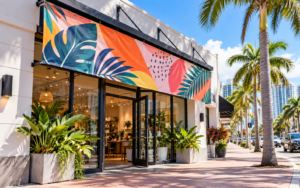
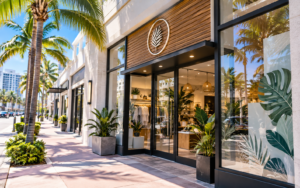
A retail storefront needs to communicate before the customer enters. Printed PVC panels can promote new collections, explain services, display pricing or support seasonal campaigns. They may be mounted inside a window, placed near an entrance or integrated into interior merchandising.
Businesses in commercial districts such as Brickell, Wynwood and Coral Gables often rely on presentation quality to differentiate themselves. Customers in these areas are exposed to sophisticated branding, so improvised materials can weaken the overall experience.
PVC can create a more cohesive environment when paired with wall lettering, display graphics and point-of-purchase materials. A weather-resistant panel may also be used in protected exterior locations, although claiming that every PVC sign is completely weatherproof would be misleading. Performance always depends on the substrate, print process, mounting and exposure.
What Should You Consider Before Ordering Signs in Miami?
Before ordering, define where the sign will be installed, how long it should remain in place and how people will view it. A small interior notice has different requirements from a panel mounted near a parking entrance. Share the dimensions, quantity, installation method and expected deadline with the print provider.
Ask whether the company provides design review, material recommendations and printing services beyond basic production. Experienced providers can identify problems with low-resolution logos, incorrect margins and unreadable text before the job is printed. They may also suggest foam board, acrylic, metal or a flexible banner when those materials better suit the application.
Turnaround should also be discussed realistically. Fast turnarounds are possible for many standard projects, but custom cutting, complex finishing and large quantities may require more production time. Companies advertising signs Miami services should explain specifications clearly rather than promising that one material works for every location.
Can PVC Signs Be Combined With Other Signage Solutions?
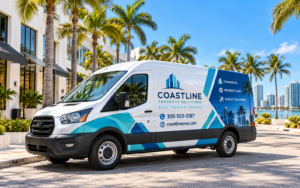
PVC does not need to function as a standalone product. Businesses often combine rigid panels with a banner, wall graphics, dimensional lettering and digital displays. This layered approach creates more complete signage solutions for offices, retail spaces and events.
A reception area may use acrylic lettering for the main logo and PVC panels for informational graphics. A retail promotion may combine a hanging panel with a window decal and floor markers. An exhibition display may feature a rigid header, portable backdrop and printed counter.
A local Miami print company can help maintain color and design consistency across these components. For regional or national campaigns, some providers can also ship nationwide, allowing businesses with multiple locations to coordinate the same visual materials beyond South Florida, including areas such as West Palm Beach.
Why Choose Graphic Arts 305 for High-Quality Prints?
Graphic Arts 305 helps businesses transform designs into professional physical displays. The objective is not merely to place color on plastic. Each project should communicate clearly, fit the installation environment and create a lasting impression.
The company can support clients who already have production-ready artwork as well as those who need assistance with layout, sizing and customization. By evaluating the intended location and use, the team can recommend whether PVC, acrylic, foam board, metal or another substrate is the most appropriate choice.
Businesses looking for high-quality prints should choose a provider that asks practical questions before production. Material, dimensions, viewing distance, lighting and installation all affect the final result. A sign becomes valuable when those decisions work together—not when a generic product is ordered without considering its real purpose.
Important Things to Remember About PVC Signage
- PVC provides a smooth, rigid surface for professional commercial graphics.
- A 3mm sheet is useful for many lightweight interior displays, but not every large installation.
- PVC works particularly well for offices, retail spaces, events and directional systems.
- Coroplast is generally more economical for temporary yard and campaign signs.
- Outdoor performance depends on printing, thickness, mounting and environmental exposure.
- Full-color UV printing can reproduce logos, text, photographs and promotional artwork.
- Matte surfaces can reduce reflections in bright interiors.
- Large exterior installations may require aluminum composite or another rigid substrate.
- Clear hierarchy and readable typography matter as much as the material itself.
- Working with an experienced local provider helps prevent artwork, material and installation mistakes.
A professionally planned sign can reinforce credibility, improve navigation and turn an ordinary wall or display area into a useful brand asset. To request a quote, provide Graphic Arts 305 with the approximate size, quantity, installation location, preferred finishing and required delivery date.