A strong real estate sign does more than announce that a property is for sale or lease. In a competitive market like Miami, the right signage can increase visibility, guide potential buyers, reinforce your brand and make every listing look more professional.
This guide explains how to choose the best real estate signage for residential and commercial properties, what materials work well in South Florida, how to use post and panel signs, banners and directional systems, and what to consider before printing or installation. If you are a realtor, broker, developer or property manager looking for professional solutions in Miami, FL, this article will help you make better signage decisions.
1. Why Does Real Estate Signage Still Matter in Miami?
Digital marketing has transformed the property industry, but physical signage still plays a unique role because it reaches people directly where the property is located.
A social media campaign requires someone to open an app.
A search ad requires intent.
A sign on a front yard can reach someone who simply happens to drive or walk past the property.
That creates immediate local visibility.
For real estate agents, this is particularly important because the sign advertises two things at the same time: the listing and the professional representing it.
A well-designed sign can help a home, office, retail space or development draw attention while strengthening the visual identity of the agent or brokerage.
This makes signage more than a property marker.
It becomes an effective marketing tool that works continuously while the sign remains installed.
2. What Types of Real Estate Signs Work Best?
The best format depends on the property, location, expected lifespan and how the sign will be viewed.
A yard sign is one of the most common choices for residential listings. It can be installed quickly and works well for messages such as For Sale, For Rent or Coming Soon.
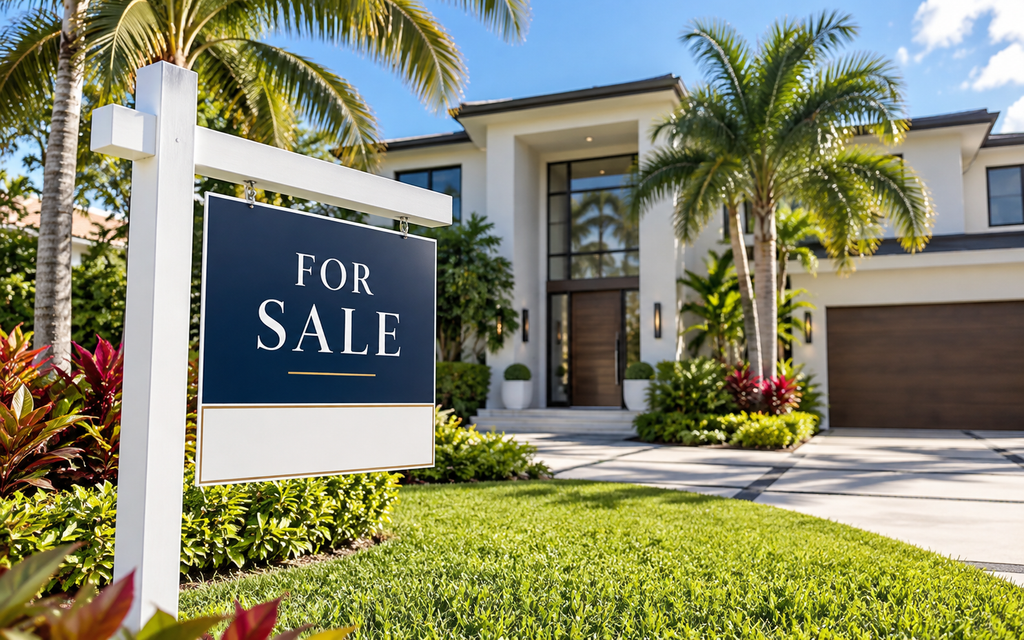
A more premium alternative is post and panel signs.
These hanging signs create a cleaner architectural presentation and are especially useful for single-family homes, luxury properties and brokerage branding.
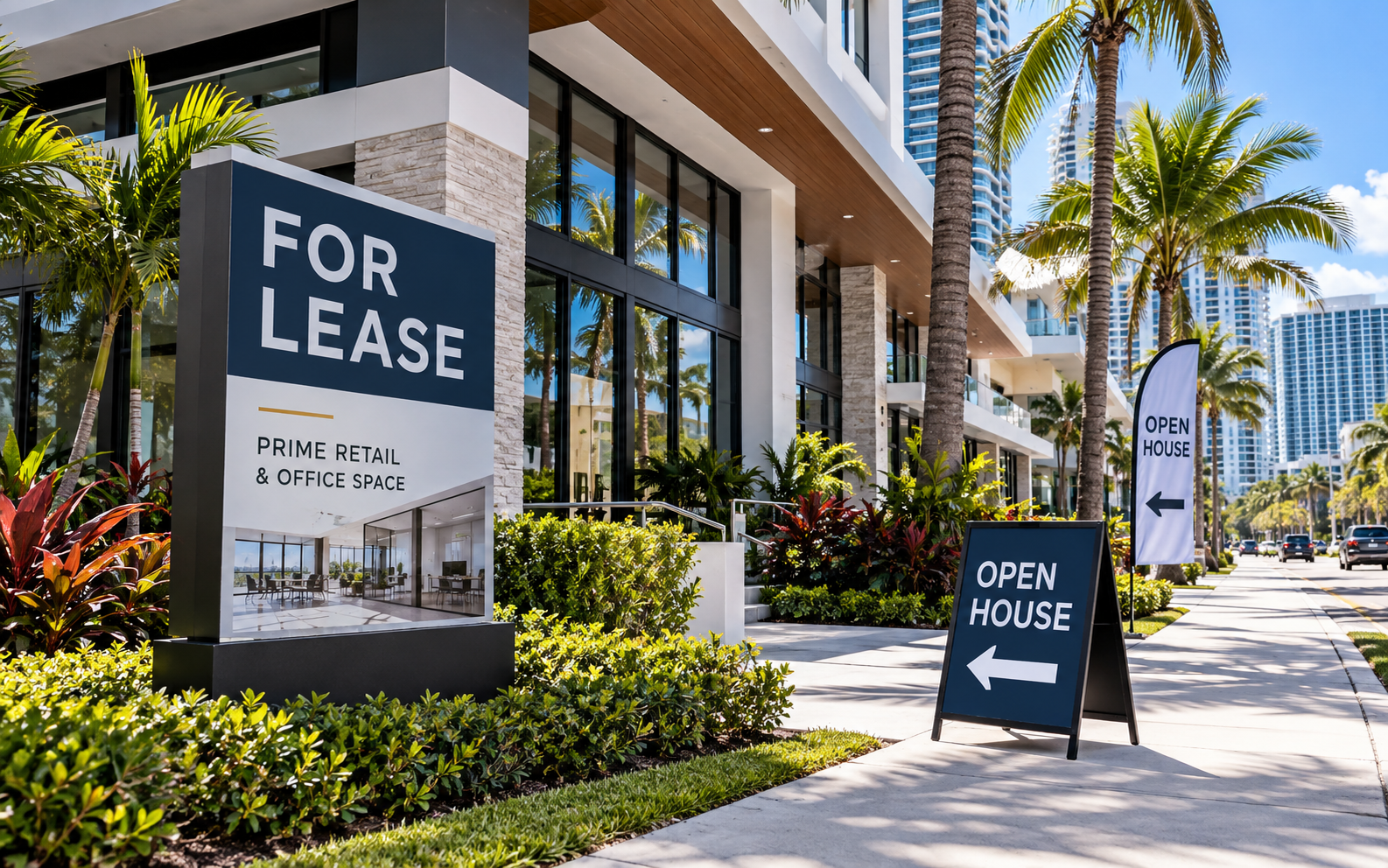
For open house events, an a-frame or temporary directional format can help visitors locate the property from nearby streets.
Other useful formats include:
- commercial property panels;
- riders;
- leasing signs;
- directional signs;
- development signage;
- window graphics;
- banner displays;
- property management signs;
- feather flags.
Each serves a different purpose.
The mistake is assuming that one design should work everywhere.
A small residential sign viewed from a sidewalk has very different requirements from a commercial panel beside a major road.
3. How Should a Real Estate Sign Be Designed for Better Visibility?
A real estate sign is usually seen quickly.
That means the design should communicate its main message within seconds.
The most important information should be easy to understand at a glance.
That may include:
property status;
agent or brokerage;
phone number;
website;
QR code;
or a short property message.
Strong visibility depends heavily on hierarchy.
If every element has the same size, nothing stands out.
A clear headline such as “For Sale” or “For Lease” should normally be larger than secondary information.
The logo should be visible enough to support the brand, but it should not compete with the purpose of the sign.
Contrast is also important.
A low-contrast design may look elegant on a monitor but perform poorly outdoors.
For roadside applications, typography should be simple, bold and large enough to remain legible from a distance.
A professionally designed sign should also avoid excessive information.
More text does not necessarily produce a better result.
A well-designed layout uses space strategically and keeps the message focused.
4. Which Materials Are Best for Miami Real Estate Signage?
South Florida weather places additional demands on outdoor graphics.
Heat, humidity, direct sunlight, strong rain and UV exposure can all affect materials.
That makes durability an important part of the decision.
Coroplast is lightweight, practical and affordable.
It works well for temporary yard signs, directional displays and short-term promotion.
PVC provides a smoother and more rigid finish. It can be useful when the sign needs a more polished appearance.
Aluminum or composite panels are often chosen when greater durable performance is required.
They can withstand outdoor exposure better than lightweight temporary materials and work particularly well for hanging or commercial signage.
Vinyl is useful for banners, decals, windows and temporary displays.
A large banner can be especially effective for commercial leasing, construction sites or new developments where a bigger message is required.
Material selection should not be based only on price.
The right question is:
How long does the sign need to remain outdoors, and under what conditions?
A material that costs less initially may not be economical if it needs to be replaced quickly.
5. How Can Custom Signs Strengthen a Real Estate Brand?
A single property sign promotes one listing.
A consistent family of custom signs can promote an entire brand.
Imagine an agent with properties in Doral, North Miami, Miami Lakes and other communities.
If every property uses completely different colors, layouts and typography, there is little visual connection between them.
If each sign follows the same design system, recognition begins to build.
That consistency can include:
logo placement;
brand colors;
typography;
sign shape;
rider layout;
contact hierarchy;
and photography style.
For real estate professionals, this can create repeated exposure across neighborhoods.
People may see the same brand several times before they ever need an agent.
This is why custom designs are valuable.
Instead of using a generic template, signage can be aligned with a brokerage or personal identity.
A sign may also be customizable for different types of property while maintaining the same core look.
That consistency makes the marketing feel more organized and professional.
6. What Role Do Directional Signs and Open House Signage Play?
A listing sign tells people where the property is.
Directional signage helps them get there.
This is especially useful during an open house, when visitors may need to navigate residential streets, entrances or larger communities.
A directional sign should be extremely simple.
Short message.
Large arrow.
High contrast.
Minimal distractions.
Examples include:
Open House →
Model Home →
Leasing Office →
Sales Center →
The goal is not to explain the property.
The goal is to move people.
This can increase foot traffic and reduce confusion.
For larger communities or developments, directional systems may also include flags, parking signs, entry panels and temporary wayfinding.
Good accessibility depends partly on helping visitors understand where to go once they arrive.
That is why directional signage can be just as important as the main property sign.
7. Do Miami Real Estate Signs Need to Follow Local Ordinances?
Yes, and this is an area where agents should be careful.
There is no single rule that applies exactly the same way throughout the entire South Florida market.
Requirements can vary by municipality, property type, zoning district, HOA, condominium association or commercial property manager.
A local ordinance may affect:
size;
height;
location;
duration;
illumination;
setbacks;
temporary use;
or installation method.
A sign in Miami may not be subject to exactly the same requirements as one in Pompano Beach, Miramar, Davie or Pembroke Pines.
The same applies to private communities.
An HOA may require a particular style, material or position.
Before ordering a large quantity of signs, it is important to confirm where they will be used.
A professional sign provider can help with production choices, but the property owner, agent or management team should verify that the final installation is compliant with the relevant local or association rules.
This is particularly important when the project includes permanent signage, large panels or specialty installations.
8. What Are the Best Real Estate Sign Options for Luxury and Commercial Properties?
Luxury listings often benefit from restraint.
A premium property does not necessarily need a louder sign.
It needs a more intentional one.
Clean typography, controlled spacing, quality materials and precise print production can communicate sophistication better than an overcrowded layout.
A polished professional sign may use rigid panels, elegant posts and carefully placed branding.
For commercial properties, the challenge changes.
Viewing distances are often greater, and the amount of information may increase.
A commercial panel may need to communicate:
For Lease;
Retail Available;
Office Space;
Industrial Space;
Future Development;
Property Managed By.
For large properties, business signage may include a combination of roadside signs, banners, building graphics, directional elements and leasing office materials.
The goal is to maximize visibility without making the property look cluttered.
In some cases, specialty finishing or sandblast techniques may also be considered for higher-end permanent sign applications.
The format should always reflect the property and audience.
9. What Should You Look for in a Miami Sign Company?
A reliable sign company should do more than print artwork onto a board.
It should understand materials, outdoor exposure, color, scale, finishing and production speed.
For real estate projects, turnaround can be especially important.
Listings move quickly.
Open houses are scheduled.
Leasing campaigns launch on specific dates.
A delayed sign can mean missed exposure.
Quality is equally important.
Poor trimming, weak colors or warped materials can hurt the professional image of a listing.
Look for a provider that offers high-quality production, consistent color, strong craftsmanship and practical recommendations based on the application.
Some companies may also offer installation services, while others focus on production only.
For projects requiring placement in the field, confirm whether installation and removal are included or coordinated separately.
A strong provider should be able to serve different signage needs without forcing every project into the same format.
10. Why Choose Graphic Arts 305 for Real Estate Sign Services?
Graphic Arts 305 provides commercial printing and signage solutions from Miami Lakes, making it a practical local partner for agents, brokerages, developers and property managers.
The advantage of working with a local provider is the ability to discuss the actual application before production.
Is the sign temporary?
Will it face direct sun?
Does it need to be visible from traffic?
Will the design change frequently?
Does the project require several formats?
These questions help determine the right materials and finishing.
Graphic Arts 305 can support a wide range of real estate sign services, including rigid panels, temporary signs, directional graphics, banners and other property marketing applications.
This makes it easier to build a one-stop visual system instead of ordering unrelated pieces from different suppliers.
For agents managing multiple listings, templates can also be created so the core design remains consistent while individual property information changes.
That helps preserve brand recognition while improving production efficiency.
Graphic Arts 305 can also produce signage that supports wider promotional campaigns, from yard signs to larger-format property graphics.
Whether you need to customize a residential panel, create commercial leasing materials or coordinate multiple sign formats, the goal should always be the same:
produce something that is visible, professional and consistent with the value of the property being represented.
Key Things to Remember About Real Estate Signs in Miami
- Real estate signage remains a powerful local marketing tool because it reaches people physically near the property.
- Choose a format based on property type, viewing distance and installation conditions.
- A yard sign works well for many residential listings, while post-and-panel systems can create a more premium appearance.
- Use clear hierarchy and strong contrast to improve visibility.
- Keep the logo and brand identity consistent across multiple listings.
- Select materials according to expected lifespan, weather and exposure.
- Coroplast, PVC, vinyl and aluminum-based panels each serve different purposes.
- Use directional signs to help visitors reach open houses, leasing centers and developments.
- Verify local ordinances, HOA rules and property restrictions before installation.
- Luxury signage should feel refined rather than overcrowded.
- Commercial properties may require larger and more complex signage systems.
- A professional local provider can help match materials, scale and finishing to the project.
- Graphic Arts 305 can support agents, brokers, developers and property managers with custom signage solutions across South Florida.